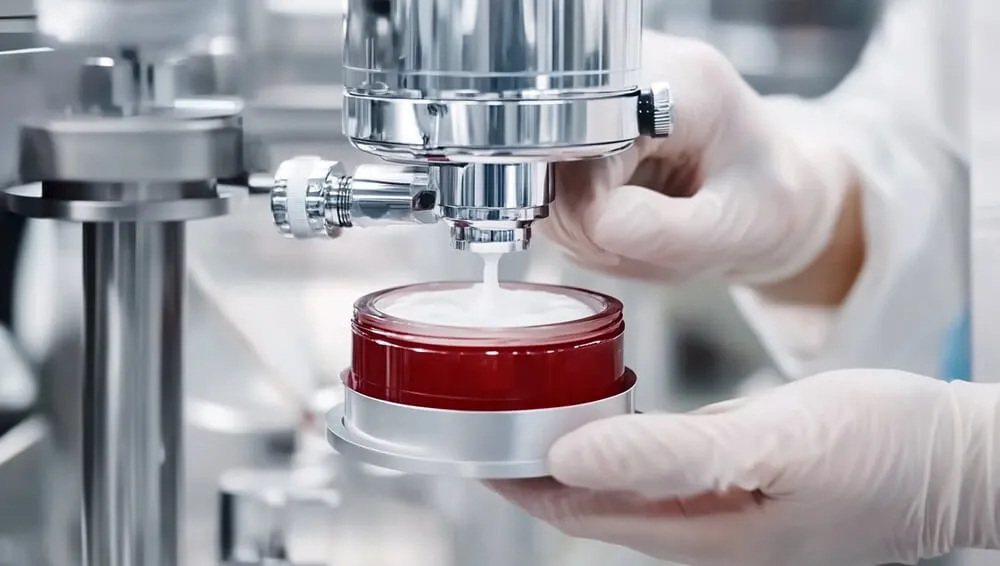
There’s a moment every cosmetics brand hits eventually — usually right after a big order comes in that the current setup can’t realistically handle — where the question of buying real production equipment stops being hypothetical. And it’s not a small decision. Get it wrong and you’re either stuck with downtime, a machine that fights your product, or a very expensive mistake sitting in the corner of your facility.
Know Your Product Before You Look at a Single Machine
Before even talking to suppliers, figure out exactly what you’re working with. A thin, runny toner and a thick body butter behave completely differently on a filling line, and equipment set up for one often struggles with the other without real adjustment. Container shape matters just as much — jars, airless pumps, squeeze tubes, glass bottles — each one needs different nozzles, different capping setups, different handling to avoid spills or damage.
Skip this step and you can end up with a machine that technically does the job but needs constant manual fiddling to keep it running, which kind of defeats the whole point of automating.
What Actually Matters When Comparing Machines
When you’re looking at equipment for cosmetic filling and packaging, a few things tend to separate a good purchase from a regrettable one:
Fill accuracy across your full SKU range is the big one — can it handle your smallest and largest products without a major recalibration each time? Speed versus flexibility is another trade-off worth thinking through honestly. If you’re running one product at huge volume, speed wins. If you’ve got a dozen small-batch SKUs, flexibility and fast changeovers probably matter more than raw output.
Material compatibility is easy to overlook but can bite you later, especially with active ingredients or natural oils that react badly with the wrong hose or filling head material. Cleaning and changeover time matters more than people expect going in — cosmetics lines switch products constantly, and a design that’s slow to clean eats into your actual usable production time. And footprint: does it fit your space now, and is there a reasonable path to expand later without ripping everything out?
Support Matters as Much as the Machine Itself
Here’s something people underweight: a machine breaking down mid-run can wreck a shipping deadline just as badly as a bad purchase decision can. Ask suppliers directly — how fast can you get parts, what’s support actually like, is training included. A machine that costs a bit more but comes from a company that answers the phone when something goes wrong is often the smarter buy over a cheaper option with no real backup plan.
Test It With Your Actual Product
If you can get a trial run before committing, do it. Viscosity, foam, suspended particles like exfoliating beads or mica — all of it can behave unpredictably on equipment you haven’t used before. A short test run costs you some time upfront, but it can save you from finding out the hard way, after you’ve already paid.
Think About Where You’re Headed, Not Just Where You Are
It’s worth asking suppliers how their systems handle growth. Some offer modular setups you can add to later; others sell fixed configurations that are much harder to adapt down the road. If there’s any real chance your product lineup expands — new formats, new containers — that flexibility is worth paying attention to now, rather than assuming your needs stay frozen in place.
Getting this decision right the first time saves you from the expensive, frustrating cycle of replacing equipment every year or two. Slow down, match the machine to your actual product, and it’ll pay you back many times over.
None of this has to drag out for months, either. Write down what your product actually needs, get quotes from more than one supplier, push for a real test run if you can, and make the call. Most bad equipment decisions come from skipping one of those steps to save a week or two — and that shortcut usually costs a lot more time in the end.