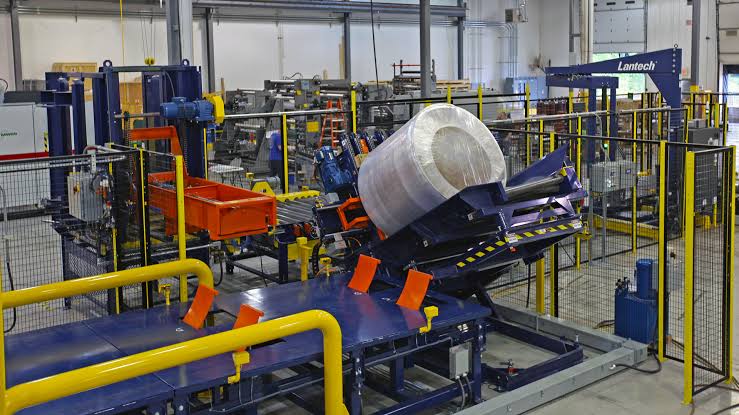
Most businesses start packing products by hand. It costs nothing extra, it needs no special equipment, and a careful worker can produce a very nice looking parcel. The trouble begins when sales grow. Suddenly the packing table becomes the slowest part of the whole operation, and deadlines start slipping. If that sounds familiar, this guide will help you understand when and why an automatic wrapping machine can make sense for a growing business.
The Hidden Cost of Hand Wrapping
Hand wrapping looks cheap because there is no machine to pay for. But the real cost is spread across many small things. Each pack takes a worker a certain amount of time, and that time adds up quickly. Film is cut by eye, so some packs use too much and others too little. Sealing quality depends on the person doing the work. And when a busy season arrives, you either hire temporary staff who need training or ask your team to work extra hours.
None of this means hand wrapping is wrong. For very low volumes or for items with unusual shapes, it can still be the best choice. The question is simply whether your current volume has outgrown it.
Signs You May Be Ready for a Machine
There is no single number that tells you when to switch, but some signs are easy to notice:
- Orders are waiting for packing while other departments are ready to ship.
- The appearance of finished packs changes from one worker to another.
- You keep running out of film sooner than planned, or you throw away a lot of damaged wrap.
- Customers or shop owners have commented on untidy packaging.
- Packing staff are tired or stretched during busy weeks.
If several of these points apply to you, it is worth doing some simple calculations. Count how many packs you wrap in a typical day, estimate the time per pack, and compare that with the rated speed of the machines you are considering.
What Changes After Automation
When a product is wrapped by a machine, the steps become predictable. The film is measured and cut by the machine, the product is covered and sealed in the same way each time, and the operator watches for problems instead of doing the repetitive folding. Many businesses find that this brings three clear improvements.
First, the output becomes steadier. You can plan your day around a known packing rate. Second, quality becomes more uniform, which supports your brand image. Third, the team is free to handle jobs such as quality checks, labelling and loading.
It is also fair to say that a machine brings new responsibilities. Someone must be trained to operate it, clean it and carry out routine checks. A machine that is neglected will not give good results, so plan for this from the beginning.
Planning the Move Step by Step
- Write down your products. List every item you wrap, with its length, width and height.
- Note your daily and peak volumes. Include your busiest weeks, not just an average day.
- Decide on your budget. Think about the purchase price, film costs, power use and spare parts.
- Prepare the space. Check the floor area, the power supply and the way products will move to and from the machine.
- Ask for a demonstration or detailed specifications. Seeing real information is better than relying on general claims.
- Train your staff. Even a simple machine works best when the operator understands it.
Questions Worth Asking a Supplier
A good supplier is happy to answer practical questions. Ask which film types the machine supports, how long it takes to change from one product size to another, which spare parts wear out first, and what kind of technical help is available after the sale. Ask for the exact specifications in writing so that you can compare more than one option fairly.
Starting With the Right Information
The best purchase decisions are made with clear facts. Take time to review technical details, compare capacities and think about how the machine will fit into your daily routine. If you want to see what is available, you can explore an automatic wrapping machine and check whether its features match the products you pack.
Conclusion
Moving from hand wrapping to automation is a big step, but it does not have to be a risky one. Look honestly at your volume, your quality needs and your budget, ask detailed questions, and choose equipment that suits the size of your business today while leaving a little room for tomorrow.