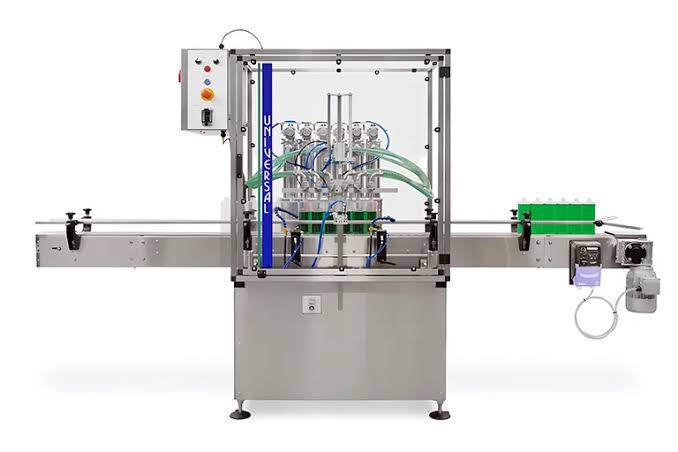
Waste in a packing area is rarely dramatic. It is a few drops spilled here, an extra bit of product in each bottle there, and a rejected batch now and then. Added up over a month, these small losses cost real money. This is one of the main reasons manufacturers invest in an automatic liquid filling machine.
Where manual filling loses money
When people fill containers by hand or with simple tools, accuracy depends on attention and fatigue. A worker who wants to avoid short bottles will tend to overfill slightly. Across thousands of bottles, that extra amount is product you made but never sold. Spills add to the loss, and cleaning them takes time too.
How automatic filling improves accuracy
An automatic machine controls the volume or the level through a fixed mechanism, a timer, a flow sensor, or a piston stroke, depending on the design. Once set up correctly, it repeats the same action every cycle. Operators can adjust the settings when switching bottle sizes, and the machine holds that setting until it is changed again.
Common filling principles include:
- Gravity filling, which suits thin, free flowing liquids
- Piston filling, which handles thicker products and measures volume directly
- Overflow filling, which gives a consistent visual level in clear containers
- Pump based filling, which can work for a range of viscosities
Each method has strengths, and none is the best for every product. Matching the method to the liquid is the core of getting accurate results.
Less contact, cleaner production
Automation also reduces how often people handle the product directly. For items such as cleaning liquids, cosmetics, oils, and food products like sauces and juices, this supports hygiene and lowers contamination risk. Hygiene still depends on proper cleaning routines and suitable materials, so the machine is one part of a larger system.
Drips, foam and nozzle design
Anyone who has filled a bottle knows about dripping after the pour ends. Good filling machines use features such as anti drip nozzles or suck back functions to limit this. For foaming products, bottom up filling, where the nozzle dips into the container and rises as it fills, helps reduce bubbles. Ask the supplier which nozzle options suit your liquid.
Settings and repeatability
Modern machines often include a control panel where you set fill volume, number of fills, and timing. Saving settings for different products speeds up changeovers. Ask whether the controller stores recipes and how easily an operator can adjust it, because a machine that only a specialist can adjust slows down your daily work.
Calibrate and check regularly
Even a good machine needs checking. Weigh or measure samples at the start of each run and at regular intervals. If the fill drifts, find the cause early, whether it is a worn seal, an air leak, or a blocked nozzle. Regular checks keep accuracy where you want it.
What to ask before purchasing
- Which liquids has this model been designed to handle?
- What is the realistic volume range per container?
- Which parts touch the product and what are they made from?
- How is the machine cleaned between products?
- What spare parts are commonly replaced, and how are they supplied?
Clear answers to these questions protect you from buying a machine that does not suit your product.
A sensible investment
An automatic liquid filling machine will not eliminate every error in a factory, but it addresses a major source of loss and inconsistency. When fill volume is steady, your product costs become easier to predict, your customers receive what they expect, and your team spends less time on repetitive work. Study your product, compare machine types, and test before you commit. Accurate filling pays back quietly, bottle after bottle.