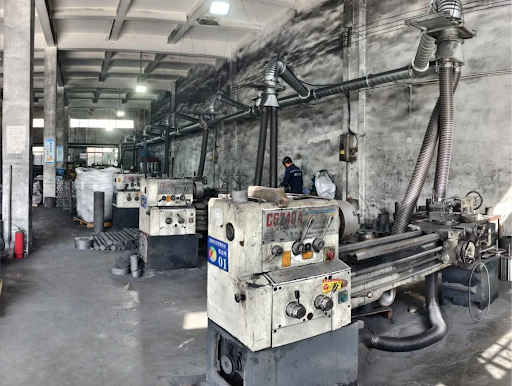
Walk through any foundry, furnace workshop or electronics plant and you may spot graphite in places you would not expect. It shows up as crucibles holding molten metal, as molds that shape castings, as plates and rods in heating systems and as rings and bearings in machinery. This article looks at the range of products offered by a typical graphite supplier, using the product list published by Haoxing Graphite, and explains what each product does and where it fits.
Why graphite suits demanding jobs
Graphite has a mix of properties that few materials share. It handles very high temperatures in non oxidizing conditions, conducts heat and electricity, resists many chemicals and can be machined precisely. It is also relatively light for the work it does. These qualities explain why it appears in so many industries.
Haoxing Graphite says it supplies graphite products for metallurgy, the aerospace industry, electronics and the bioengineering industry. That is a wide set of fields, from heavy casting to precision components.
Graphite crucibles
A crucible is a container used to melt and hold metal. Graphite crucibles are common in foundries because graphite tolerates high heat and conducts it well, so the metal inside heats evenly. Haoxing lists crucibles as one of its core products. Buyers should choose the size and grade to suit the metal being melted and the type of furnace.
Graphite molds
Molds shape molten metal into finished or semi finished forms. A graphite mold can be machined with precise details, and it holds up well against repeated heating. Haoxing lists graphite molds in its range and says its engineers can work with customers from the design stage to produce the required mold or other component.
Graphite plates, rods and blocks
Plates, rods and blocks are basic forms. They may be used as they are, for example as heating or support elements, or machined further into custom parts. Haoxing lists plates, rods and blocks among its products. Material choice matters here, since density, particle size and hardness affect strength and performance, and the company says it helps customers select the proper type of graphite on these factors.
Graphite rotors and impellers
Rotors and impellers are used in processes where molten metal needs to be treated or stirred. In aluminum processing, for example, a rotating graphite part can be used to disperse gas into the melt to help remove unwanted gases and impurities. Haoxing lists both graphite rotors and graphite impellers, and its website also lists an aluminum melting furnace and a hot top billet casting machine, which shows its connection to the metal processing field.
Graphite rings, bearings and tubes
Rings and bearings are used where parts need to slide or seal in demanding conditions. Graphite can act as a self lubricating material in certain applications, which is why it is considered for bearings. Tubes serve in heating or fluid handling settings. Haoxing lists graphite rings, bearings and tubes in its range, and the company’s website shows rings as a major product category with a patent certificate for a graphite ring.
Graphite heating elements
Heating elements convert electricity into heat inside furnaces. Graphite is suitable for high temperature furnaces operating in vacuum or protective gas, since it can reach and hold very high temperatures there. Haoxing lists graphite heating elements among its products. As always, remember that graphite oxidizes in open air at high temperature, so the furnace atmosphere must be controlled.
Ceramic refractory materials
Beyond graphite, Haoxing lists ceramic refractory materials. Refractory materials are designed to resist heat and are used to line furnaces and similar equipment. Offering both graphite and ceramic items lets a customer source related materials from one place.
How to choose the right product
Selecting a graphite part is not just about shape. A few questions guide the decision. What is the maximum working temperature? What atmosphere will the part sit in, air, vacuum or inert gas? Will it be in contact with molten metal or chemicals? What mechanical load will it carry? How tight must the dimensions be?
When you give these answers to a supplier, they can recommend the right grade. This is where an experienced company adds value, and Haoxing says it has been producing graphite since 2006.
Quality and delivery
Good parts need good checks. The company states that it uses coordinate measuring machines, airtightness testers and hardness testers, and that products are packed in plywood boxes without fumigation, with foam cushioning, for shipment to over 50 countries.
Final thought
Graphite is a quiet material that does a great deal of work behind the scenes. Understanding the main product types helps you describe your need clearly, ask better questions and receive parts that last. Start with your application, share your drawings and conditions, and let the supplier help you narrow the choice.